
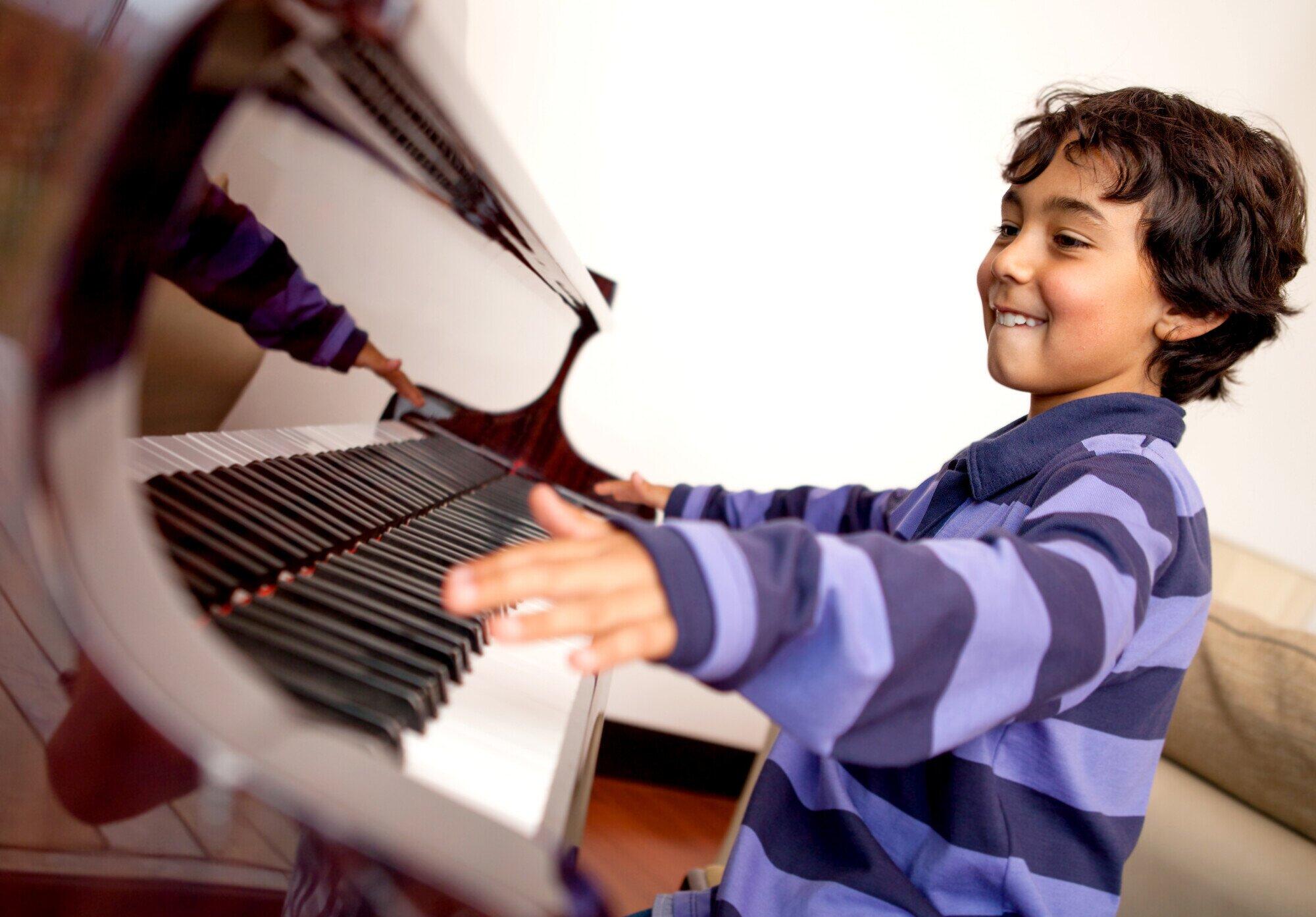
Music plays an important role in helping students succeed both in and out of the classroom. At Legacy Traditional Schools, we see the connection between music and education every day through student growth, confidence, and engagement.
According to YouGov, younger Americans are increasingly exposed to playing music, with two-thirds learning an instrument at some point, often during childhood.
The benefits of music education are clear, especially when music in schools is structured and consistent. Through the Mozart Performing Arts Program, students participate in music classes four days per week, exploring instrumental and vocal music, piano labs, and music theory.
In this blog post, we will explore how music supports academic success, personal development, and long-term student growth.
How Does Music Improve Educational Success?
Music supports many of the skills needed for strong academic performance. Students who take part in regular music lessons often improve:
- Focus
- Listening
- Memory
These skills help them stay engaged during lessons and complete tasks more effectively.
Here at Legacy Traditional Schools, music is part of a structured schedule. Students in the Mozart Performing Arts Program attend classes four days per week, which helps build consistency and discipline. Regular practice supports better habits in the classroom.
Music also connects to subjects like reading and math. Learning rhythms, patterns, and sequences strengthens problem-solving and comprehension skills. These connections support overall academic progress.
The benefits of music education go beyond one subject. Students develop habits that support long-term success, making music a valuable part of a well-rounded education at Legacy.
How Does Learning an Instrument Impact a Child?
Learning an instrument helps students build confidence and responsibility. Practice requires time and effort, which teaches patience and persistence. Students begin to take ownership of their progress.
At Legacy Traditional Schools, students can explore instruments through band, orchestra, recorder, and piano labs. Each option gives students a chance to develop new skills in a supportive environment.
Piano labs offer a unique experience. Teachers provide real-time feedback through headsets, allowing students to learn at their own pace while staying guided and supported.
Performance opportunities also play a role, and students gain confidence when they share their progress with others. These experiences help them grow both academically and personally.
How Legacy’s Mozart Program Supports Creative Growth
Legacy Traditional Schools focus on expanding creativity through structured learning. The Mozart Performing Arts Program reflects this approach with consistent and engaging music instruction. Students are encouraged to explore and develop their interests.
Music classes take place four days per week, each lasting 45 minutes. Students learn instrumental and vocal music, along with music history and theory. This variety supports both creativity and understanding.
Teachers create a positive and supportive environment. Students feel comfortable trying new things and building their skills over time. Creativity grows through regular practice and encouragement.
Legacy believes in developing well-rounded students. The Mozart program supports creative growth while helping students stay engaged and confident in their learning journey.
Building Confidence and Community Through Music
Music helps students connect with others and build strong relationships. Group activities like ensembles encourage teamwork and communication. Students learn to listen, support each other, and work toward shared goals.
At Legacy Traditional Schools, music brings students together in a positive way. Classes and performances create opportunities to collaborate and celebrate progress. These shared experiences strengthen school culture.
Students also build confidence through participation. Performing in front of others helps them feel proud of their efforts and more comfortable expressing themselves.
Music supports both personal and social growth. Legacy’s approach ensures students feel part of a community where they can develop skills, build friendships, and enjoy learning together.
Frequently Asked Questions
How Early Can Students Start Learning Music at Legacy?
Students at Legacy Traditional Schools begin engaging with music as part of their K-8 education. Early exposure helps build confidence and familiarity with musical concepts over time, and consistent practice supports steady growth as students move through each grade level.
What Makes the Mozart Performing Arts Program Different?
The program provides music classes four days per week, giving students regular and structured exposure. Lessons include instrumental, vocal, and theory-based learning. This consistent schedule helps students build skills and confidence more effectively.
Do Students Learn Both Music Theory and Performance?
Yes, students learn both the foundations of music and how to perform. Lessons include music history, theory, and hands-on practice. This balance helps students understand and apply what they learn.
How Do Piano Labs Support Student Learning?
Piano labs allow students to develop keyboard skills in a focused setting. Teachers provide real-time feedback through headsets, supporting individual progress. Students can learn at a pace that suits their ability.
Can Music Help Students Stay Engaged in School?
Music adds variety to the school day and keeps students interested in learning. Regular participation encourages focus and involvement. Students often feel more motivated when they can explore creative subjects.
Are There Opportunities for Students to Perform?
Students take part in performances through ensembles and class activities. These opportunities allow them to share their progress and build confidence. Performing also helps students feel connected to their peers and school community.
Does Music Support Skills Outside the Classroom?
Music helps students develop discipline, responsibility, and teamwork. These skills carry over into daily life and other activities. Students benefit from both personal and academic growth through music education.
How Does Music Support Student Confidence Over Time?
Regular music practice helps students see steady progress in their abilities. Small improvements build confidence and encourage them to keep learning. Over time, students become more comfortable performing and expressing themselves in front of others.
Combine Music and Education for Lasting Success
Music and education work together to support well-rounded student growth at Legacy Traditional Schools. Through the Mozart Performing Arts Program, students build confidence, discipline, and creativity while strengthening skills that contribute to educational success.
Regular music instruction, performance opportunities, and supportive teaching help students stay engaged and motivated. Families value an environment where academics and the arts are given equal importance.
Enrolling at Legacy gives students access to meaningful music experiences that enhance learning and personal development. Music becomes part of a broader journey that prepares students for success in school and beyond, helping them grow with confidence, focus, and a strong sense of achievement.