
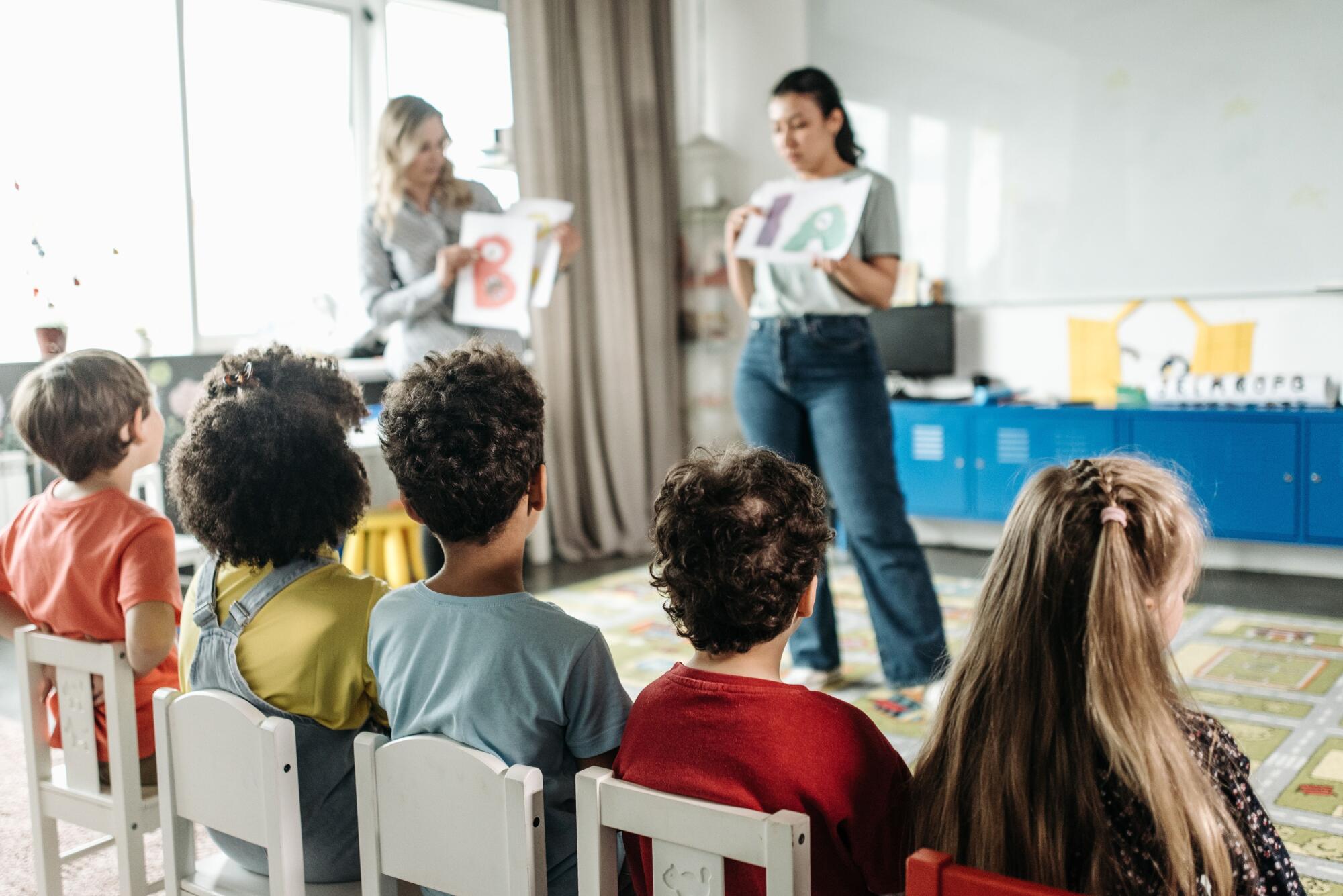
Traditional schools often teach reading through direct language instruction, phonics, spelling, vocabulary, writing, and guided practice. Math is often taught through step-by-step skill building, practice, problem solving, and concept review. In traditional education, both subjects rely on structure, clear routines, and steady academic growth.
Recent federal testing showed a shift. NAEP results released in 2026 found that 9-year-olds improved in reading and math after earlier declines, while older students saw little change.
Arizona parents are taking note.
Reading and math shape every year that follows. Reading builds understanding across subjects. Math builds reasoning and confidence with numbers.
Many families look for classrooms that are structured and clear. They want lessons that move from simple to more complex without confusion.
Traditional education offers a steady approach. Reading and math are taught differently because each skill develops in its own way.
How Are Reading and Math Taught Differently in Traditional Schools?
Reading often begins with language. Teachers focus on:
- Letters
- Sounds
- Spelling patterns
- Vocabulary
- Fluency
- Comprehension
Students learn how words work before they are asked to read harder text.
Reading in traditional schools often includes direct instruction.
Teachers model:
- Sounds
- Words
- Sentence patterns
Students practice reading aloud. They answer questions about what they read. They also write responses to build understanding.
Math works in another way. Teachers introduce numbers, facts, operations, and problem types in a planned order. Students practice a process until they can use it with accuracy.
Math methods in schools often include:
- Repetition
- Review
- Guided problem solving
Students begin to:
- Learn steps
- Check answers
- Explain how they reached a result
Reading asks, “What does the text mean?” Math asks, “What process solves the problem?”
Both subjects need focus. Each one builds different habits.
What Is the Difference Between Traditional and Modern Teaching Methods?
Parents often search for traditional vs modern education because classroom methods have changed over time. Reading debates have often centered on:
- Phonics
- Whole language
- Balanced literacy
- The science of reading
Structured reading instruction is a major focus in current reading conversations.
Modern math also looks different from past math. Many newer approaches use:
- Visual models
- Multiple strategies
- Concept-based reasoning
Parent-focused education sources note that current math lessons often stress problem solving and understanding, not only memorizing facts.
A strong education methods comparison does not need to frame one model against another. Instead, parents can ask how a school teaches core skills.
A clear curriculum helps parents understand what students learn and why it matters.
How Traditional Schools Teach Reading
Traditional reading instruction often starts with the building blocks of language. Students learn:
- Letter sounds
- Spelling patterns
- Word structure
- Grammar
- Sentence meaning
Legacy Traditional Schools says its Arizona language arts program uses the Spalding Method with The Writing Road to Reading. The program integrates listening, speaking, spelling, writing, and reading through direct instruction.
A traditional classroom may teach reading through:
- Phonics and word patterns
- Spelling and vocabulary
- Oral reading and fluency
- Grammar and sentence structure
- Reading comprehension
- Written responses
Reading is not only about saying words correctly. It is about building meaning from language.
How Traditional Schools Teach Math
Math instruction often follows a clear sequence. Students learn number sense first. Later, they move into:
- Operations
- Fractions
- Measurement
- Geometry
- Higher-level problem solving
Legacy Traditional Schools states that its Arizona and Nevada campuses use enVision Math. The program includes:
- Lessons
- Activities
- Assessments
- Textbooks
- Workbooks
- Technology
It also focuses on deeper concept understanding as lessons move from introduction to stronger use of a concept.
National data also shows why strong math foundations matter. USAFacts reports that 2024 NAEP data found about 39% of fourth graders, 28% of eighth graders, and 22% of twelfth graders reached proficient or advanced levels in math.
Traditional math lessons may include:
- Teacher modeling
- Guided examples
- Independent practice
- Math facts and review
- Word problems
- Assessments that show skill gaps
Steady practice matters. Students need:
- Accuracy
- Speed
- Reasoning
A child who knows basic facts can focus better on complex problems.
How to Choose a Charter School With Strong Reading and Math
Arizona parents can look for signs of a strong academic plan. A school should explain how it teaches reading. It should also explain how math skills grow across grades.
Legacy Traditional Schools serves Arizona communities through multiple campuses. Its Arizona school finder lists locations such as Avondale, Casa Grande, Chandler, Phoenix, and more.
A school visit can help families see the learning environment. Parents can observe:
- How teachers guide students
- How classrooms feel
- How expectations are shared
Frequently Asked Questions
Why Do Traditional Schools Often Emphasize Phonics in Reading?
Traditional schools often use phonics because young readers need to connect letters with sounds. Strong phonics instruction helps students decode unfamiliar words instead of guessing.
Reading also requires:
- Vocabulary
- Fluency
- Background knowledge
- Comprehension
A balanced traditional approach usually connects these parts through spelling, writing, grammar, and reading practice. Parents should ask how phonics fits into the full language arts block.
Why Do Math Lessons Include So Much Repetition?
Repetition helps students remember facts, steps, and patterns. Math becomes harder when students must stop and think through every basic fact. Practice builds fluency, which frees the mind for harder reasoning.
Repetition should still include meaning. Students need to know why a process works, not only how to repeat it.
How Can Parents Support Reading and Math at Home?
Parents can support reading by listening to children read, asking about the story, and reviewing spelling or vocabulary. Math support can include:
- Flashcards
- Real-life money practice
- Cooking measurements
- Positive homework routines
Short, steady practice works well. A calm tone also matters because confidence affects learning.
Request Information About Traditional Education in Arizona
Traditional education teaches reading and math differently because each subject develops different skills.
Legacy Traditional Schools offers tuition-free public charter schools in Arizona with a back-to-basics academic model. Students build foundations in reading, writing, and math while also exploring STEM, music, visual arts, fitness, clubs, and character-centered learning. Families are welcomed as partners, and classrooms are designed to give students structure, support, and room to grow.
Request information from Legacy Traditional Schools to learn more about campuses, curriculum, enrollment, and how a traditional K-8 charter school setting can support your child in and out of the classroom.