
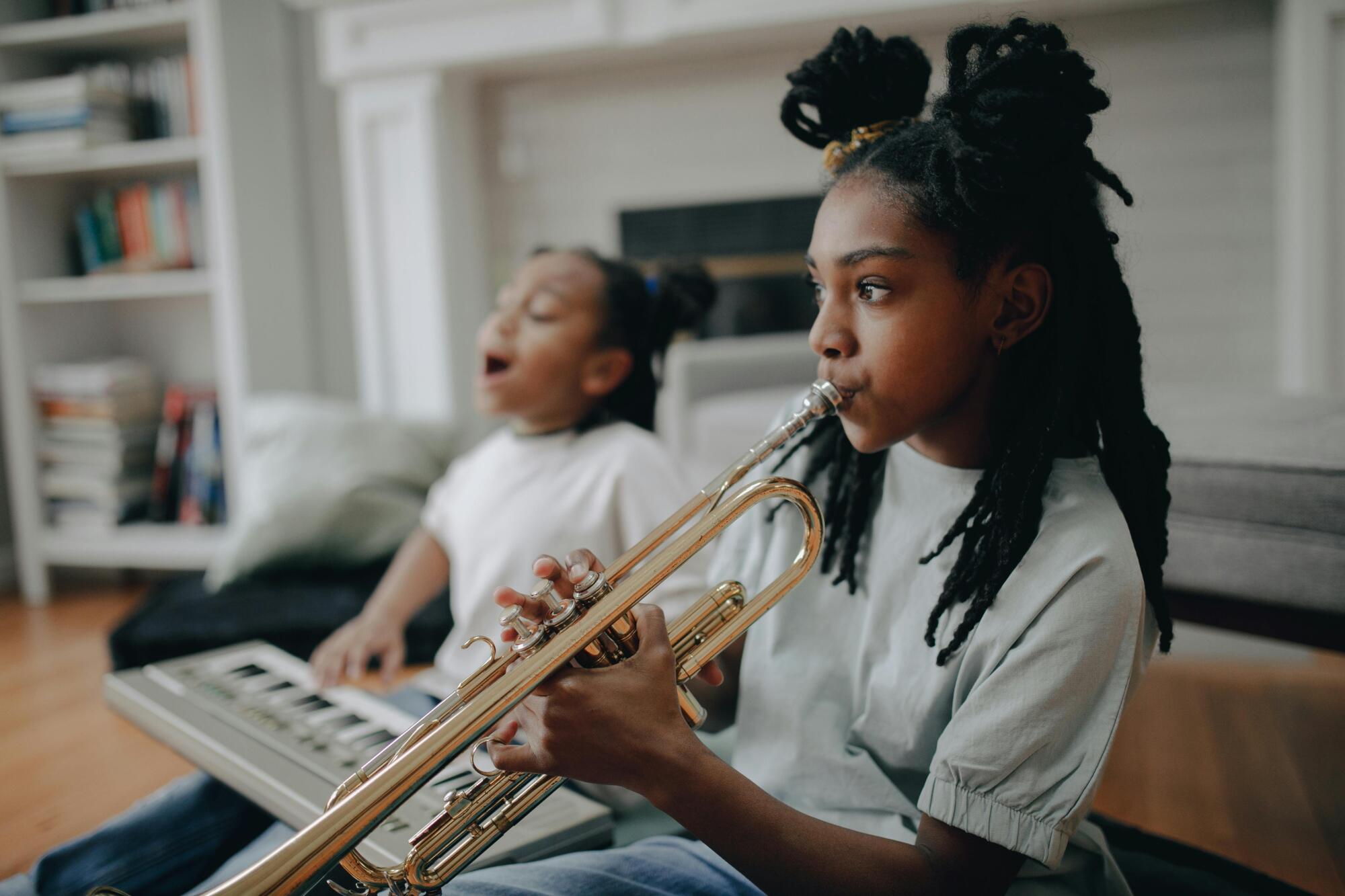
A performing arts program builds cognitive skills, emotional resilience, and social confidence that carry well beyond the stage. Research consistently links arts participation to stronger academic outcomes in math, language, and science. These benefits make performing arts a meaningful pillar of any well-rounded education.
Students involved in the arts were five times as likely to graduate from high school as those with low involvement, according to the National Dropout Prevention Center. That’s a striking edge. Children who sing, perform, and rehearse together develop focus, empathy, and creative thinking, qualities that shape how they approach every challenge ahead.
The earlier they start, the deeper those foundations go.
Why Does Performing Arts Matter in a Child’s Education?
Arts education gives children regular practice with skills that transfer directly to the classroom. Research from the National Endowment for the Arts shows that students who participate in the arts tend to perform better academically across multiple subjects, including math, language, and science.
Theater programs Arizona schools offer often incorporate memorization, timing, and focused attention, all of which strengthen how students approach learning overall.
A study from npj Science of Learning found that students who received arts-integrated instruction showed significant gains in creative thinking and academic engagement. Music, in fact, strengthens the brain’s ability to process language and mathematical reasoning.
Building Confidence One Performance at a Time
Stepping onto a stage takes real courage, and doing so repeatedly builds genuine self-esteem. Artistic skill development happens gradually through rehearsals, constructive feedback, and, of course, live performance experience. That process teaches children to trust their own abilities in and outside the classroom.
Children who perform publicly learn to manage nerves and present themselves clearly, skills that actually show up in class presentations, job interviews, and everyday leadership moments. The emotional growth that comes from performing is real and measurable.
Students learn to work through discomfort, recover from mistakes quickly, and keep going, which builds resilience in ways that carry into daily life.
Creativity, Collaboration, and the Skills That Last a Lifetime
Dance and drama classes build problem-solving and original thinking through movement, storytelling, and performance. Students typically learn to work as a team, listen actively, and adapt to the needs of a group. These are, by the way, some of the most sought-after skills in any career or college setting.
Research from the Association for Cultural Economics International confirms that students in arts programs are more likely to stay in school. Performing alongside peers teaches communication in a very direct way. Students read body language, respond to cues, and support one another, and that kind of collaboration clearly develops skills that extend well beyond the stage.
Some additional skills students often develop through performing arts participation:
- Strong listening skills built through rehearsal and ensemble practice
- Adaptability from learning to adjust performances in real time
- Discipline from consistent practice and preparation
- Leadership experience from taking on roles in productions
- Emotional awareness from portraying characters and stories
What Does a Performing Arts Program Actually Look Like for Arizona Students?
A quality performing arts school structures arts education around consistent, skilled instruction across a range of disciplines. Students benefit most from programs that combine music performance courses with ensemble participation, music theory, and hands-on performance. That combination gives students a thorough, well-rounded arts education with multiple opportunities to grow.
Programs vary by campus, so parents should ask about the specific offerings at each school before enrolling. Some programs include vocal ensembles, instrumental bands, and piano instruction in dedicated spaces with proper equipment.
Legacy Traditional Schools, for example, offers the Mozart Performing Arts Program four days per week, complete with state-of-the-art piano labs, instrumental and vocal ensembles, and music theory, all at no cost to families.
The quality of instruction and the consistency of programming really do make a significant difference in what students get out of an arts education. Parents should look for programs that offer performance opportunities throughout the year, so students have a clear goal to work toward.
When choosing a program, parents can look for these key features:
- Dedicated rehearsal and performance spaces on campus
- Trained music and arts educators leading instruction
- Opportunities for students to perform publicly throughout the year
- A range of disciplines, including vocal, instrumental, and theory
- Programs available across multiple grade levels
Frequently Asked Questions
Does My Child Need Prior Experience to Participate?
No prior experience is needed to join a performing arts program. Programs typically welcome students at all skill levels, from complete beginners to those with some background in music or performance. Teachers structure lessons to meet students where they are and help each child progress at their own pace.
How Do Performing Arts Classes Fit Into the Academic School Day?
Many schools integrate arts instruction directly into the regular school schedule. Students attend performing arts classes during the school day, so there is no need for extra after-school commitments. That structure makes participation accessible for all students, regardless of family schedules.
Are There Opportunities for Students to Perform Publicly?
Most programs include performances throughout the school year, such as concerts, recitals, or showcases. These events give students a real audience and a tangible goal to work toward. Public performances are a key part of building stage presence and confidence.
Can Performing Arts Support Children Who Are Shy or Have Learning Differences?
Performing arts programs can be very effective for children who are shy or who learn differently. The arts offer multiple ways to express ideas and build skills, which can work well for students who find traditional academic settings challenging. Over time, participation tends to build confidence and social ease in a supportive environment.
Give Your Child the Tools to Thrive
A performing arts program strengthens academic performance, builds emotional confidence, and develops the teamwork and creativity children need throughout their lives. From rehearsal to performance, every element of arts education shapes a more capable, well-rounded student.
At Legacy Traditional Schools, Arizona families have access to the tuition-free Mozart Performing Arts Program; four days per week of instrumental ensembles, vocal music, state-of-the-art piano labs, and music theory, all built into the school day for Pre-K through 8th-grade students. Apply for enrollment today and give your child a school where the arts are treated as essential to their success.