
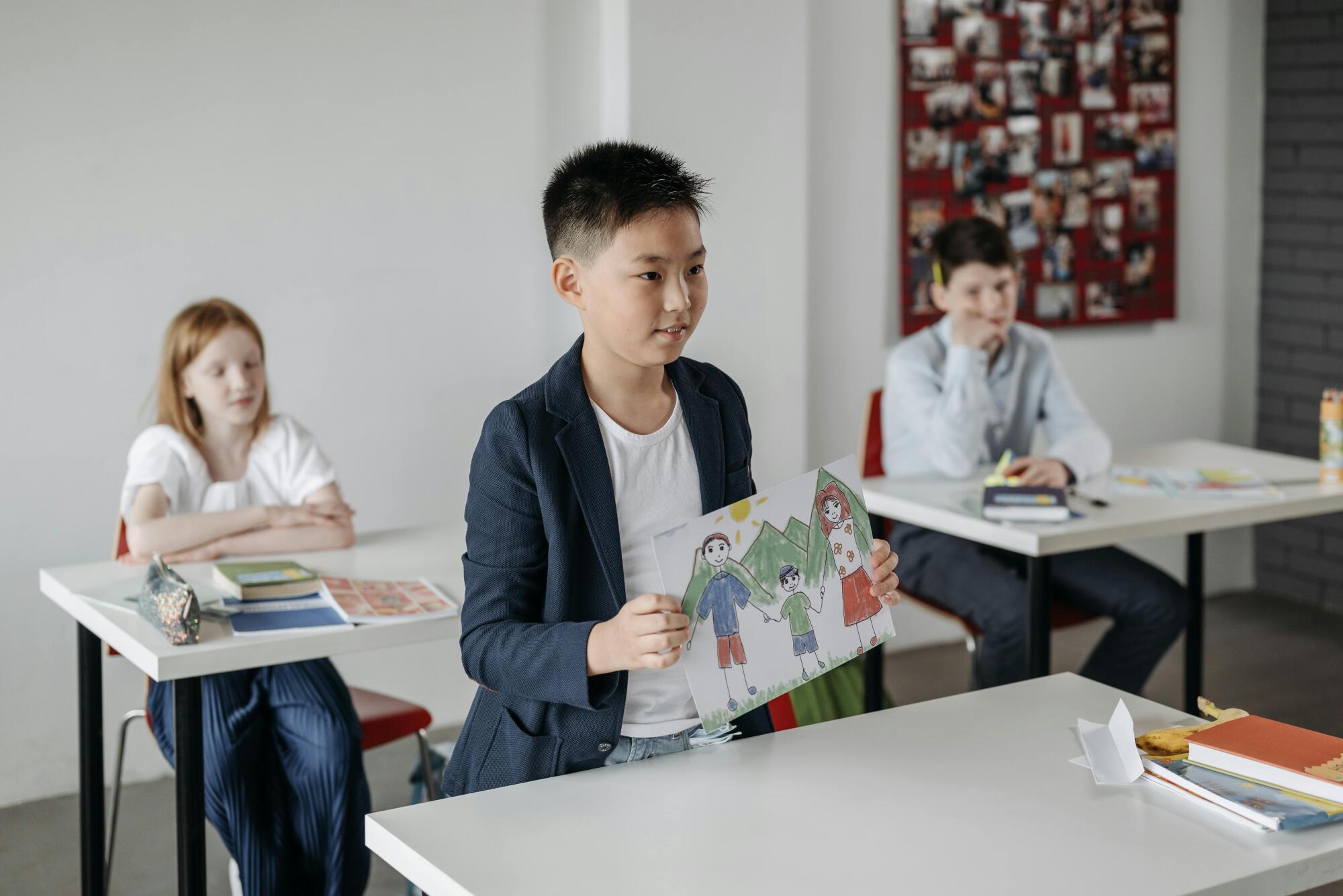
What is a traditional school? In simple terms, it is a school model built around teacher-led instruction, clear routines, core academic subjects, and steady expectations for behavior and work. Parents often choose this approach because it gives children structure, consistency, and strong skill-building in reading, writing, and math.
Many families are looking for stability in a school system that can feel scattered. The Nation’s Report Card found that fourth-grade reading scores in 2024 were five points lower than in 2019, which is one reason more parents are asking hard questions about how schools teach basic skills.
This guide explains what traditional schools are, how they developed, what families often like about them, and how to think through traditional vs modern education when choosing the right fit for a child.
What Is a Traditional School in Practice?
A traditional school usually follows a clear daily schedule and a teacher-directed classroom model. Students move through planned lessons, practice core skills regularly, and are expected to meet defined academic and behavior standards.
The structure of traditional schools tends to be easy for families to understand. There is usually a strong focus on direct instruction, assigned classwork, homework, regular testing, and clear consequences that help students know what is expected.
Traditional schools also tend to put core academic subjects at the center of the day. The base that supports later learning includes:
- Reading
- Writing
- Grammar
- Spelling
- Mathematics
- Science
- History
For many families, predictability is not boring. It is useful. A child who knows the routine can spend more energy learning and less energy trying to figure out what happens next.
The History of Traditional Schools in America
The history of traditional schools in the United States is tied to:
- The growth of public education
- Shared academic standards
- The belief that schools should help build both knowledge and citizenship
Over time, schools became more organized around:
- Grade levels
- Subject-based instruction
- Regular attendance
Federal education records go back more than a century. The National Center for Education Statistics notes that the federal government has collected education data since the late 1800s, and its long-running historical reports show how American schooling developed into a more formal and structured system over time.
That long history helps explain why many parents still recognize the traditional model right away. Even as schools change, the idea of a classroom led by a teacher, centered on academic mastery, remains familiar because it has shaped American education for generations.
Why Many Parents Still Value a Back-to-Basics Model
One reason families still choose this approach is that it feels clear. Children know:
- When to listen
- When to practice
- When to ask questions
- How progress is measured
Another reason is that parents often want strong academic foundations before anything else. That is where many of the real traditional education benefits show up, especially in the early grades when students are learning how to read fluently, write clearly, and solve math problems with confidence. A child who can read well, write clearly, and work through math with confidence is better prepared for advanced classes, technology, and real-world problem-solving later on.
Family involvement matters too. Research from the Institute of Education Sciences shows that when families are involved in their children’s education, students often have better attendance, stronger grades, and better adjustment to school, which makes family engagement an important part of long-term student success.
How Legacy Traditional School in Arizona Fits This Approach
Legacy Traditional School in Arizona is built around a traditional, back-to-basics model within a tuition-free public charter school setting. That gives families access to structure and core academics while still using the flexibility that charter schools can have.
Legacy serves students in kindergarten through eighth grade and emphasizes reading, writing, and mathematics as core building blocks. At the same time, students also have opportunities to grow through athletics, arts, clubs, and community involvement.
The school network’s scale also matters to many parents. With 22 campuses, more than 915 teachers, and more than 22,170 students, Legacy has grown because many families are actively looking for a school model that feels both academically serious and community-centered.
Parents who want a deeper look at why this type of environment can help students build strong habits can read more about strong learners. Structure and opportunity do not have to compete with each other. In a well-run traditional charter school, they can work together.
Frequently Asked Questions
Do Traditional Schools Leave Less Room for Creativity?
Not necessarily. Creativity does not disappear just because a classroom has structure. In many schools, students actually do more creative work once they have stronger basic skills, because they can read more independently, write more clearly, and handle more complex assignments without getting lost.
Are Charter Schools the Same as Private Schools?
No. Charter schools are public schools, which means they are tuition-free and open to families under the rules of their charter and state law. According to a 2024 federal update, the United States had 8,010 charter schools in the 2023 through 2024 school year, showing how large this public school option has become.
What Should Parents Watch for When Visiting a Traditional School?
Look at how teachers manage the classroom, how students respond to instructions, and whether the environment feels calm and purposeful. Parents should also ask:
- How reading and math are taught
- How progress is tracked
- How behavior is handled
- How the school communicates with families when a child needs help or extra challenge
Can a Traditional School Still Prepare Students for Modern Life?
Yes, and that is the point many people miss. Children still need discipline, attention, reading strength, writing ability, number sense, and good habits before they can use technology well. A strong traditional model can prepare students for modern life by giving them the tools to think clearly instead of relying on shortcuts.
Choose a School Model Built on Strong Foundations
What is a traditional school? It is a school model that gives children structure, strong academic foundations, and clear expectations that support steady growth over time.
Legacy Traditional Schools stand out by combining a tuition-free public charter model with a back-to-basics curriculum, kindergarten through eighth grade continuity, and a mission focused on building both lifelong learners and good citizens. Arizona families ready to take the next step can enroll now.